
Stop termites before they get to the house
Certified Subterranean Termite Treatment in McAllen
Termites work quietly until the damage is loud. Termite control in McAllen leads everything we do here.
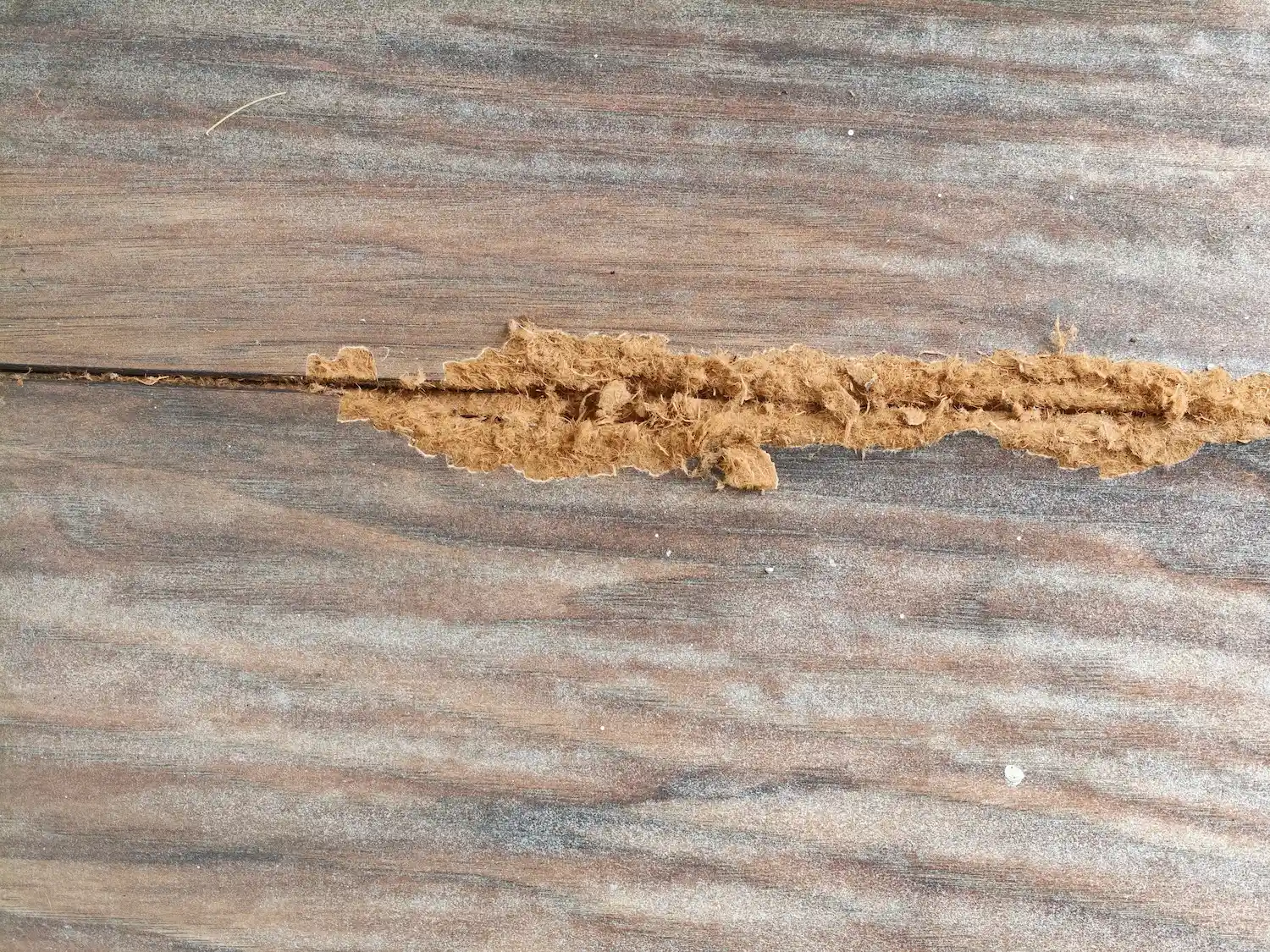
The Mud Tubes Climbing Your Slab
Those pencil-width mud tubes running up the slab are the reason subterranean termite treatment in McAllen belongs at the top of your list, not next spring’s. Termites build these tubes from soil and saliva to travel from the ground to the wood without drying out in the open air. Snap one open and you may catch pale workers still moving inside, which means a colony is feeding on your home right now. Our guide to what mud tubes mean covers how to read a tube’s size, freshness, and direction before you touch it. Near windows and along the foundation you might also spot small piles of discarded wings, shed by swarmers that left a mature colony to start new ones. A tube on the block or a scatter of wings by the glass is the colony announcing itself, and the wood behind your walls has been on the menu for months. We read these clues on the first visit and follow them back to the exact points where termites are slipping past the slab.
Formosan Termites in Hidalgo County
Not every subterranean termite in the Valley behaves the same, and that changes how the job gets done. Native subterranean termites live in colonies of tens of thousands and chew slowly. Formosan subterranean termites, confirmed in Hidalgo County as one of 31 Texas counties on the Texas A&M distribution list, run colonies that can reach the millions and eat far faster. A larger, hungrier colony means more feeding pressure on the slab and less time before the damage shows. Their tunnels fan out underground, reaching the slab from several sides. A Formosan colony can hollow structural wood in a fraction of the time a native colony takes, so the subterranean termite control has to hit harder and cover more soil. The Valley’s subtropical climate helps them along, since there’s no hard winter freeze to knock a colony back the way northern states get. When we inspect, we note which pressure we’re dealing with, because a Formosan job calls for more product in the ground and closer follow-up. For how we handle every species, our termite control hub lays out the full approach.
How We Trench, Treat and Verify
A subterranean termite job is a soil job first. Because these termites live in the ground and come up through the slab, the fix is a continuous chemical barrier in the soil that rings the whole foundation. We dig a shallow trench along the exterior, and where the slab meets a patio, porch, or garage, we drill through the concrete to reach the soil under it. On a pier-and-beam home the treatment follows the interior piers and the perimeter beam instead, since that’s the path the termites climb. Then we apply Termidor at label rate so the treated band comes out even and unbroken, with no gaps for termites to route around. The trench has to stay continuous the whole way, because a colony only needs one thin spot to keep marching up into the framing. We hold the trench to a steady depth so the treated band stays unbroken. A barrier with even one untreated stretch is an open door, so we measure and map the slab before the first shovel goes in. Here’s how a typical treatment runs:
Termidor is non-repellent, so termites can’t detect the treated soil and walk right through it, carrying the product back to the colony on their bodies. Because it moves through the colony, one treated band can reach a distant nest. That transfer effect is what reaches the nest we can’t dig up, not just the workers crossing the barrier.
Clay Soil and the Cracks It Opens
McAllen sits on expansive clay soil that swells after every heavy rain and shrinks tight in a drought. That constant movement cracks slabs, pulls the concrete away from plumbing lines, and opens hairline gaps a termite worker can walk through. Every spot where a pipe or conduit passes through the slab is a ready-made entrance, and the moisture that collects around those penetrations is exactly what subterranean termites follow. Termites don’t chew through concrete, they find the gaps the clay already made and travel straight up them. Add the Valley’s humidity and a slow plumbing leak under the slab, and a colony has water, shelter, and a highway into the framing all at once. This is why a barrier has to close off the soil around every penetration point, not just the open trench along the outside wall. We take slab moisture readings during the inspection so we know which stretches of your foundation the termites are most likely to work, and which cracks are pulling the water that leads them in. Those readings steer where the barrier goes.
Mapping the Soil Treatment Zones
A barrier only works if it truly surrounds the whole structure, and a slab paced off by eye leaves stretches guessed at instead of measured. Before we treat, we map the foundation so the soil treatment zones match the real footprint of your home, including the additions and patios that throw off a quick walk-around. We record the perimeter with a Moasure 3D measurement, which captures the property in inches rather than rough steps. The device measures the property, it never detects termites, and a licensed applicator still makes every treatment call. A treatment zone drawn to the true perimeter is what keeps a termite from finding the one corner a tape measure skipped.
That same map tells us where to set the monitor stations later, so nothing gets lost under mulch or sod between visits. It also becomes a record we pull up next year, so a follow-up crew works from the same footprint instead of pacing the yard again. Accurate on the front end means the barrier and the monitoring both land where the termites actually travel.
Double Treatment and a 2-Year Warranty
One pass through the soil isn’t where we stop. A subterranean termite job from AAA Pest Control includes a double treatment, so the barrier gets built up instead of laid down once and hoped over. After the soil work, we set bait station monitoring around the property and check the stations on a schedule to catch any activity that tests the barrier. The whole job is backed by a 2-year warranty, and if termites show up during the term, we come back and re-treat at no extra charge.
Because we mapped the property, we find every station by coordinate instead of memory, so none go missing between visits. A fresh hit on one station tells us the colony is testing that corner, so we treat the soil zone before it becomes a breach. Termite work is one part of the pest control service this McAllen family has run since 1977, and if you need an official inspection for a sale, our termite inspection writes measured findings into the Texas WDI report. Here’s what the warranty and monitoring cover:
That warranty and the monitoring behind it are why a treated McAllen home stays protected long after the trench is filled back in, through seasons of clay-soil movement. If it comes back, so do we, and you’ll have the terms in writing before any work starts. Call AAA Pest Control and talk to a Gutierrez about your slab.
Subterranean Termite Treatment in McAllen FAQs
McAllen Subterranean Termite Treatment Questions
Termites raise a lot of questions once you spot the first mud tube, so here are straight answers about how AAA Pest Control handles subterranean termites in McAllen. If your question isn’t here, call and a real person picks up during business hours.
Mud tubes on your McAllen slab mean subterranean termites are actively traveling from the soil into your home’s wood. They build the pencil-width tubes to stay moist while they feed, so a fresh tube usually points to a live colony close by. If you break one open and see pale workers, or the tube gets rebuilt within a few days, the infestation is active. AAA Pest Control traces the tubes back to the entry point and treats the soil before the damage spreads further.
Native subterranean termites and Formosan subterranean termites both attack McAllen homes, but Formosan colonies are far larger and more aggressive. A native colony numbers in the tens of thousands, while a Formosan colony can reach the millions and hollow structural wood much faster. Formosan termites are confirmed in Hidalgo County, one of 31 Texas counties on the Texas A&M list, so the risk here is real. We identify which pressure you’re facing, because a Formosan job needs more product in the ground and closer follow-up.
Subterranean termites reach a McAllen slab home through cracks in the concrete and the gaps around plumbing and utility penetrations. The Valley’s expansive clay soil swells and shrinks with the weather, which splits slabs and opens hairline routes termites follow up into the framing. Any spot where a pipe passes through the slab holds moisture, and that moisture is exactly what draws them. AAA Pest Control closes off the soil around those penetration points, not just the open ground along the outside wall.
Subterranean termite treatment pricing in McAllen tracks the perimeter footage of your slab, whether the home sits on a slab or pier-and-beam, and how much drilling the penetration points require. An active Formosan infestation and larger foundations move the number, as does adding bait station monitoring and the 2-year warranty. AAA Pest Control measures and maps the property first, then gives a free written estimate with no trip fee. You see a real price before any soil work starts.
A double treatment means AAA Pest Control builds the soil barrier up in two applications on a McAllen home rather than a single pass, so there are no thin or missed stretches for termites to route around. Subterranean colonies only need one gap to keep reaching the wood, and the clay soil here shifts enough to challenge a barrier over time. The second treatment reinforces the coverage and is part of what the 2-year warranty is built on. It’s the difference between a barrier that holds and one that leaks.
Trench and treat usually does involve some drilling on a McAllen slab home, but only where the foundation meets concrete like a patio, porch, or garage floor. We dig a shallow trench in the open soil along the exterior, then drill small holes through the attached slabs so the termiticide reaches the ground underneath. The holes get patched when the work is done. We map the slab first so the drilling hits only the penetration points that actually need it.
After the soil treatment, termite monitor stations sit in the ground around your McAllen property and let AAA Pest Control catch any new activity that tests the barrier. We check them on a schedule and, because the property was mapped, we find every station by coordinate instead of memory, so none disappear under mulch or sod. If a station shows activity during the 2-year warranty, we come back and re-treat. The monitoring is what turns a one-time treatment into ongoing protection.
Piles of discarded wings inside a McAllen home are a strong sign a subterranean termite colony is close and has started to swarm. Winged reproductives leave a mature colony, fly a short distance, drop their wings, and pair off to start new colonies, so the wings often collect on windowsills or in spider webs. Finding them indoors usually means the colony is in or under the structure, not out in the yard. It’s worth an inspection from AAA Pest Control before those new colonies settle in.
A liquid termite barrier and bait stations do two different jobs on a McAllen property. The liquid barrier, applied as a Termidor trench-and-treat around the slab, is the primary treatment that stops termites from reaching the wood and carries back to the colony through the non-repellent chemistry. Bait station monitoring rings the property afterward to catch activity the barrier turns away and to flag any new pressure. AAA Pest Control uses the liquid barrier to treat and the stations to watch, so the two work together rather than replacing each other.
There’s no such thing as a good termite
Our Termite Treatment Plans
Termite Inspection
Termite Treatment
Did you know?
The 2018 Great June Flood put so much water over Mission and the Mid-Valley that crews rescued more than 200 people. What the water leaves behind is its own event, because it’s the fleas, roaches and mosquitoes that surge for weeks once yards dry.
Let’s Connect
Contact AAA Pest Control in McAllen Today
We treat your home
like it’s our home
You See ‘Em, We Kill ‘Em

Celebrating 50 years serving the Rio Grande Valley
Quick Links
Services
Please Review Us
We sure could use your help letting Rio Grande Valley know how good we are.
Copyright © 2026 AAA Pest Control
4313 N 10th St Ste H, McAllen, TX 78504